


THE LENNARD: A HOME IN CONVERSATION
May 29, 2026
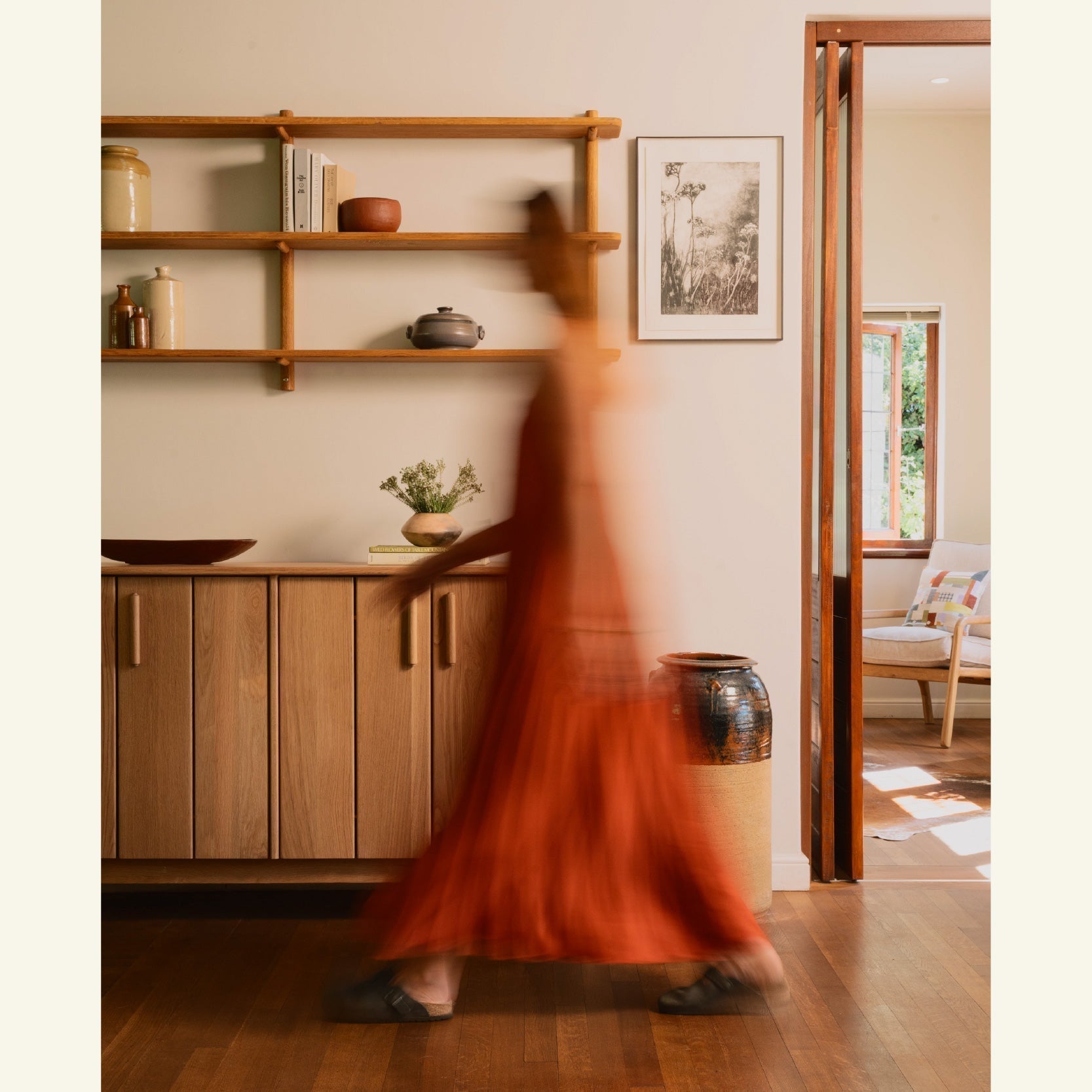
Inside a Cape Town home layered with timber, colour, art and furniture made to be lived with over time.
Some homes announce themselves all at once. Others reveal themselves gradually — through the way light glows on a timber floor, the familiar curve of a chair’s arm, or a cabinet opened to reveal the rituals stored inside.
The Lennard belongs to the second kind.
A home close to the heart of Pedersen + Lennard, the Lennard is where furniture, art, textiles and everyday objects flow into conversation with one another. Built in the 20th century (and later renovated by Lennard & Lennard Architects in 2020) with original Japanese oak flooring and timber-framed windows, the house carried its own material character before a single piece of furniture was added. Light filters through the rooms generously, catching the grain of the flooring, the texture of linen, the gloss of ceramics and the softer details that make a home feel personal.

RANGES, FINISHES AND PIECES IN CONVERSATION
Rather than presenting each piece in isolation, The Lennard shows how different Pedersen + Lennard ranges and finishes can sit together naturally. A Tulbagh Server stands below open shelving, holding its place among ceramic vessels, books and flowers. A Tulbagh TV Cabinet rests beneath a painting by Michael Amery from the family’s personal collection, its warm timber tones meeting the colours of a South African landscape. In the bedroom, an Escarpment Bed Frame and Headboard are paired with Tulbagh Bedside Tables and an Atlas Lamp. The oil finishes on each do not match perfectly, and that is precisely why the room works.
There is a freedom in that approach. The home does not rely on repetition to feel cohesive. Instead, it is held together by shared values: natural material, considered proportions, useful design and a sense of ease. The different timber tones speak to one another without needing to look identical. Cane, linen, oak, ceramic and glass each bring their own texture, while the furniture gives the rooms structure without making them feel overly arranged.
This is one of the better lessons of The Lennard: a home becomes richer when all its pieces are allowed to belong.

STORAGE THAT SUPPORTS THE RHYTHMS OF HOME
The Tulbagh storage pieces are especially at home here. Rooted in the same Cape furniture tradition that inspired the Tulbagh Chair, they carry forward a language of utility, comfort and enduring appeal. They are substantial without feeling heavy, practical without losing warmth, and expressive in the restrained way that timber furniture is.
In the Drinks Cabinet, that practicality becomes a ritual. Closed, it is a handsome timber form, with vertical grain, rounded legs and the familiar detailing of the Tulbagh range. Open, it reveals the social life of the home: glasses neatly suspended, bottles arranged, Minimalist Wines and Pienaar & Son spirits ready for the next evening with friends.
The Linen Cabinet tells a different story. Its doors open to folded towels, blankets, slippers and baskets — the softer and more intimate moments of daily life. It is less about display and more about the private order that keeps a home functioning. The timber exterior gives the piece presence, but its purpose is deeply domestic: to hold the things reached for often, put away again, and folded back into routine.

Elsewhere, the TV Unit brings the Tulbagh language into a more contemporary setting. It makes space for modern living without letting a screen dominate the room. Books, bowls and artwork soften the scene around it, while its drawers and cupboards do the necessary work of storage. This balance between visible and concealed, useful and beautiful, is where the piece earns its place.
The Server, too, speaks to the home’s layered rhythm. Placed below open shelves, it creates a wall of timber, ceramics, books, vessels and art — not a manicured display, but a charming composition that feels gathered over time. It can serve a dining room, living room or passage, but here it does something more subtle: it shows how storage can become part of the architecture of a room.
GATHERING COLOURS AND TEXTURES
Colour enters the home in much the same way. Not as a scheme, but as a series of gestures: a green vase holding pink lilies. A blue and white ceramic vessel catching light against linen curtains. A quilt folded across a bed. The colours do not compete with the timber; they animate it.

In the bedroom, this becomes especially clear. The Escarpment Bed in Natural Oil brings the calm of pale timber and cane, while the Tulbagh Bedside Tables in Coffee Oil add a deeper note beside it. The Atlas Lamp in Pure Oil introduces another finish again, proof that a room can hold several material voices at once if each one is chosen with care. The textiles by so far studios by Lucie Panis-Jones add a more expressive layer: pattern, softness and colour against the room’s grounded timber base. The result is not overly styled. It feels lived with, slept in, adjusted, used.

The finishes do not match perfectly, and that is precisely why the room works.
ART, MEMORY AND THE PERSONAL LAYER
Pedersen + Lennard furniture has always been shaped by the belief that good design must work well in real life. The Lennard gives that belief a domestic setting. These are pieces made to hold all the practical objects that accumulate around a household; not waiting for perfect conditions, but already involved in the day.
The art deepens that feeling. Michael Amery’s paintings from the couple’s personal collection bring landscape and memory into the rooms, adding another register to the conversation between material and colour — not merely decorating the walls, but changing the way the furniture is read.
This is what the home does best. It makes space for relationships between things: between old flooring and new furniture; Cape furniture references and contemporary forms; natural timber and bright textiles; practical storage and personal objects. Between the designed and the inherited, the made and the collected, the useful and the beautiful, there is also a particular pleasure in seeing Pedersen + Lennard pieces in the home of one of its founders.
Not because it turns the house into a brand statement, but because it shows the furniture behaving as intended. The pieces do not ask to be treated preciously; The Lennard shows that a Pedersen + Lennard home does not need to be perfectly matched. It needs to be lived in.

FURNITURE MADE TO GATHER MEANING
Across its rooms, the house offers a way of thinking about furniture that feels generous and forgiving — start with pieces that are well made and let timber finishes mix. Allow colour to arrive through textiles, flowers, art and objects and make room for storage that does its work beautifully. Choose things that can gather meaning as life moves around them.
In the end, The Lennard is not only a portrait of a home. It is a portrait of furniture in use — pieces shaped by material and craft, then softened by family life, personal taste and time. It is a home in conversation, and every room has something to say.
Photographed by Guy Mills - Instagram
